Guerilla Open Access Manifesto
Information is power. But like all power, there are those who want to keep it for themselves. The world’s entire scientific and cultural heritage, published over centuries in books and journals, is increasingly being digitized and locked up by a handful of private corporations. Want to read the papers featuring the most famous results of the sciences? You’ll need to send enormous amounts to publishers like Reed Elsevier.
There are those struggling to change this. The Open Access Movement has fought valiantly to ensure that scientists do not sign their copyrights away but instead ensure their work is published on the Internet, under terms that allow anyone to access it. But even under the best scenarios, their work will only apply to things published in the future. Everything up until now will have been lost.
That is too high a price to pay. Forcing academics to pay money to read the work of their colleagues? Scanning entire libraries but only allowing the folks at Google to read them? Providing scientific articles to those at elite universities in the First World, but not to children in the Global South? It’s outrageous and unacceptable.
“I agree,” many say, “but what can we do? The companies hold the copyrights, they make enormous amounts of money by charging for access, and it’s perfectly legal — there’s nothing we can do to stop them.” But there is something we can, something that’s already being done: we can fight back.
Those with access to these resources — students, librarians, scientists — you have been given a privilege. You get to feed at this banquet of knowledge while the rest of the world is locked out. But you need not — indeed, morally, you cannot — keep this privilege for yourselves. You have a duty to share it with the world. And you have: trading passwords with colleagues, filling download requests for friends.
Meanwhile, those who have been locked out are not standing idly by. You have been sneaking through holes and climbing over fences, liberating the information locked up by the publishers and sharing them with your friends.
But all of this action goes on in the dark, hidden underground. It’s called stealing or piracy, as if sharing a wealth of knowledge were the moral equivalent of plundering a ship and murdering its crew. But sharing isn’t immoral — it’s a moral imperative. Only those blinded by greed would refuse to let a friend make a copy.
Large corporations, of course, are blinded by greed. The laws under which they operate require it — their shareholders would revolt at anything less. And the politicians they have bought off back them, passing laws giving them the exclusive power to decide who can make copies.
There is no justice in following unjust laws. It’s time to come into the light and, in the grand tradition of civil disobedience, declare our opposition to this private theft of public culture.
We need to take information, wherever it is stored, make our copies and share them with the world. We need to take stuff that’s out of copyright and add it to the archive. We need to buy secret databases and put them on the Web. We need to download scientific journals and upload them to file sharing networks. We need to fight for Guerilla Open Access.
With enough of us, around the world, we’ll not just send a strong message opposing the privatization of knowledge — we’ll make it a thing of the past. Will you join us?
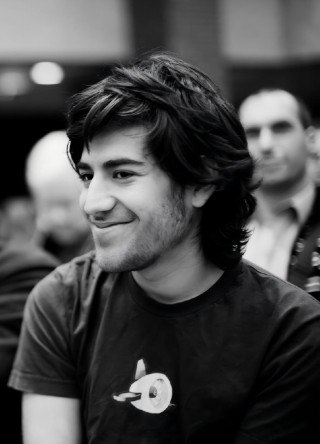
Aaron Swartz July 2008, Eremo, Italy
中文译 – 游击队开放访问宣言
信息就是力量。正如所有力量一样,总有人希望将它据为己有。这个世上的全部科学文化遗产,它们历经百年通过书籍期刊这样的纸质传承下来,现在却因为数字化而被一小部分私人组织据为己有。你想要阅读那些报道科学界最著名成果的论文吗?那就向 Reed Elsevier (世界知名的出版集团)支付高额的费用吧。
有一些人立志改变现状,开放访问运动(Open Access Movement)一直英勇地奋斗着,旨在确保科学家们不再放弃他们的版权,而是将其研究成果公布在互联网上,在允许任何人获取的条款下。但即使一切顺利,他们的工作也只适用于未来出版的内容。而至今所有的文献都将被“遗失”。
看到这些文献所要付出的价格太过高昂,这是在强迫研究人员付钱去看他们的同事的研究成果。将所有图书馆的书都扫描了,结果只允许 Google 的员工阅览?给世界一流大学提供科学文献,那贫困地区的小孩怎么办?这个现状简直不可理喻让人无法接受。
很多人都说他们也觉得这是不合理的,“但是我们能做什么?那些大公司垄断了版权,他们通过收取费用赚得盆满钵满,而这,是完全合法的。我们对此无能为力”。但这种说法站不住脚,我们能够做一件事,而且这件事已经开始了:那就是反击。
学生、图书管理员还有科学家们,你们都可以获取到这些资源,当世界上其他人都被知识拒之门外时,你们正在这片海洋里徜徉。真的,从道德上,你不需要也不应该自私地占有这项特权。你有责任把知识共享给这个世界。而你们也在做呀,和同事交换密码,帮朋友下载资料。
在此期间,被挡在门外的人们也不曾呆立原地。你们穿过重重障碍,将那些曾被牢牢紧锁的知识共享给你们的朋友。
但所有这些行动都在暗中进行,隐秘地处于地下。它被冠以“盗窃”或“盗版”之名,好像共享知识能够与洗劫一艘船并杀害船员等同似的。但是分享绝非不道德——它是一种道德上的必然。只有那些被贪婪蒙蔽的人们才会拒绝与朋友分享。
大公司,当然被贪婪蒙蔽了双眼。他们赖以运作的法律对此要求如此——他们的股东绝不会容忍任何损失。而他们收买的政客则支持他们,通过法律赋予他们决定谁可以复制的独家权力。
在不公正的法律中何来公正而言。是时候将我们的行动公之于众,秉承公民不服从的伟大传统,宣告我们反对这种对公共文化的私人窃取。
我们需要获取知识,无论它在何方,我们都要得到它并将之传播开来。我们要将没有版权的资料收集起来,并归档。我们需要购买秘密数据库并将它们放到 Web 上。我们要下载科学期刊,再将它们共享出去。我们需要为游击队开放访问奋斗。
只要我们足够团结,遍布全球,我们不仅会发出反对知识私有化的强烈信号——我们终将使其成为历史。你愿意加入我们吗?
亚伦·斯沃茨 2008年7月于意大利埃雷莫
In deepest memory of Aaron Swartz. You can find his life and legacy in this documentary — ‘The Internet’s Own Boy: The Story of Aaron Swartz’.
本文永久更新地址:
https://rayyu.me/p/2026-01-04-guerilla-open-access-manifesto/

共有 0 条评论